
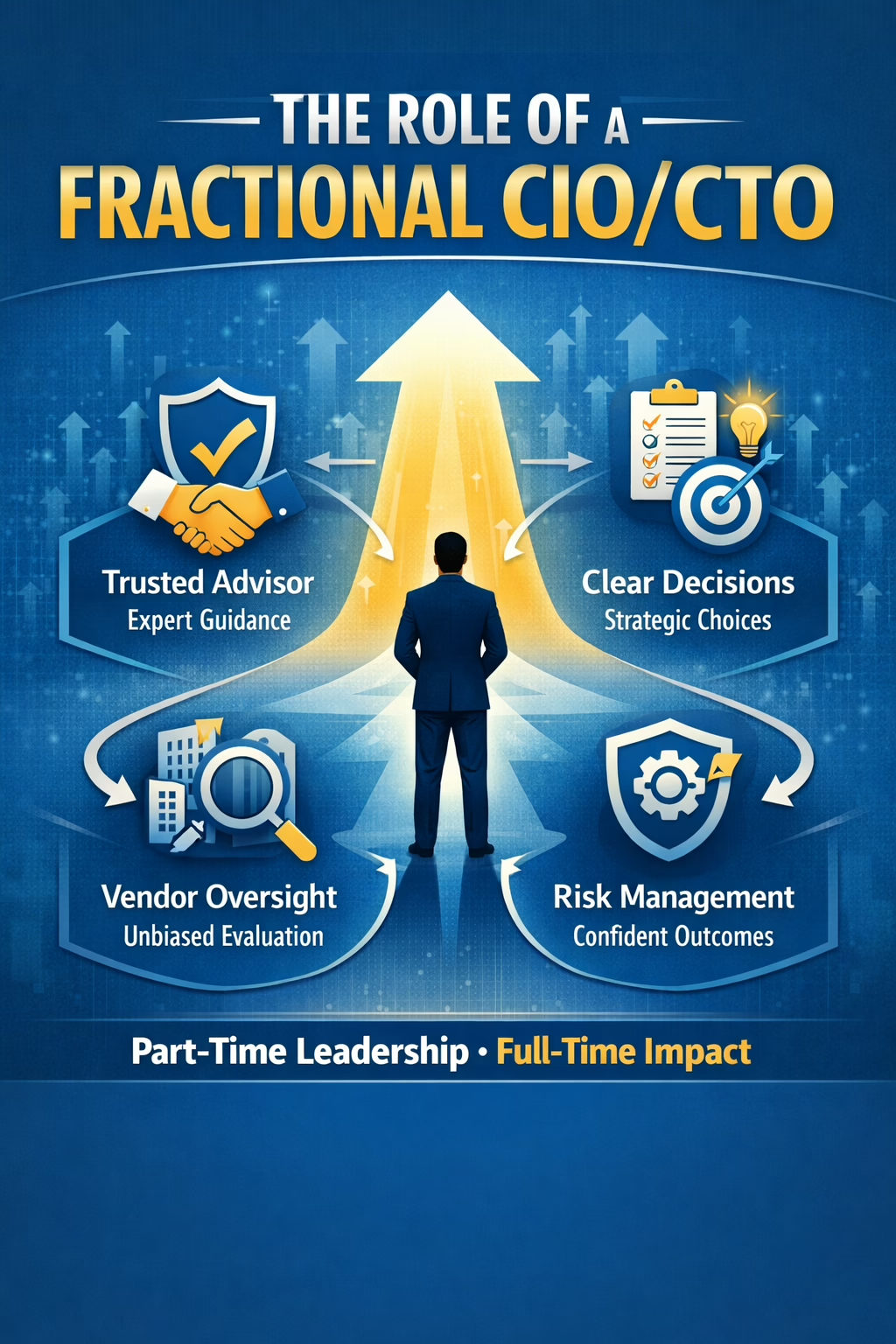
The Role of A Fractional CIO/CTO

What Is a Fractional CIO or CTO — and Why Your Business Might Need One

As organizations grow, technology decisions become more complex, higher-risk, and more tightly connected to business outcomes.
A fractional technology leader can bring executive-level guidance without the overhead of a full-time hire.


Many companies reach a stage where they need senior technology leadership—without needing or justifying a full-time executive role.
That’s where a fractional CIO (Chief Information Officer) or fractional CTO (Chief Technology Officer) comes in.

What “Fractional” Means

A fractional CIO or CTO provides experienced, executive-level technology leadership on a flexible, part-time basis.
This model gives organizations access to strategic oversight, planning, and decision support—scaled to their actual needs.

At Open InfoTech Solutions, fractional leadership is intentionally flexible. Whether you need a few hours per week,
periodic support for planning and budgeting, or deeper involvement during a major initiative, the engagement adapts to your business.

Why Not Rely Solely on Your Managed Service Provider (MSP)?

Even the strongest MSPs are typically reactive by nature—responding to requests, incidents, and defined scopes of work.
When they present options, leaders are often left with a critical question:
How do we objectively evaluate these choices in the context of our business goals?

How a Fractional CIO/CTO Helps

  • Provide business-aligned technology guidance
  • Evaluate vendor recommendations with an independent lens
  • Reduce risk by improving decision clarity and accountability
  • Act as an executive counterpart to MSPs, vendors, and internal teams

Unlike vendors who may benefit from specific tools or partnerships, a fractional executive is focused on
what is best for your organization—technically, financially, and operationally.

When a Fractional CIO or CTO Makes Sense

Organizations often seek fractional leadership during moments of change or complexity, such as:

Your IT team is keeping systems operational, but strategic initiatives, scalability planning, and future-state architecture are difficult to prioritize.

The executive team has defined objectives but lacks confidence in evaluating vendors, platforms, or architectural approaches.

You’ve lost a key IT leader and need experienced guidance to stabilize operations and chart a path forward.

Your MSP may be performing well—or struggling—but you need assurance their recommendations and priorities align with your business strategy.

In each of these scenarios, a fractional CIO or CTO brings clarity, structure, and executive-level accountability—without the cost or commitment of a full-time hire.

The Value of Fractional Leadership

Fractional CIOs and CTOs are not a replacement for your internal team or service providers. They add a strategic layer
connecting business goals to technology execution, reducing risk, and helping leadership teams make informed decisions with confidence.

The difference is moving from reacting to technology challenges to using technology as a competitive advantage.

Next step

Want to explore a fractional engagement?
Schedule a conversation with an expert

Tags: Fractional CIO, Fractional CTO, IT Strategy, Technology Leadership, MSP Oversight

AI Markdown Feed – A WordPress Plugin

AI Markdown Feed – A WordPress Plugin

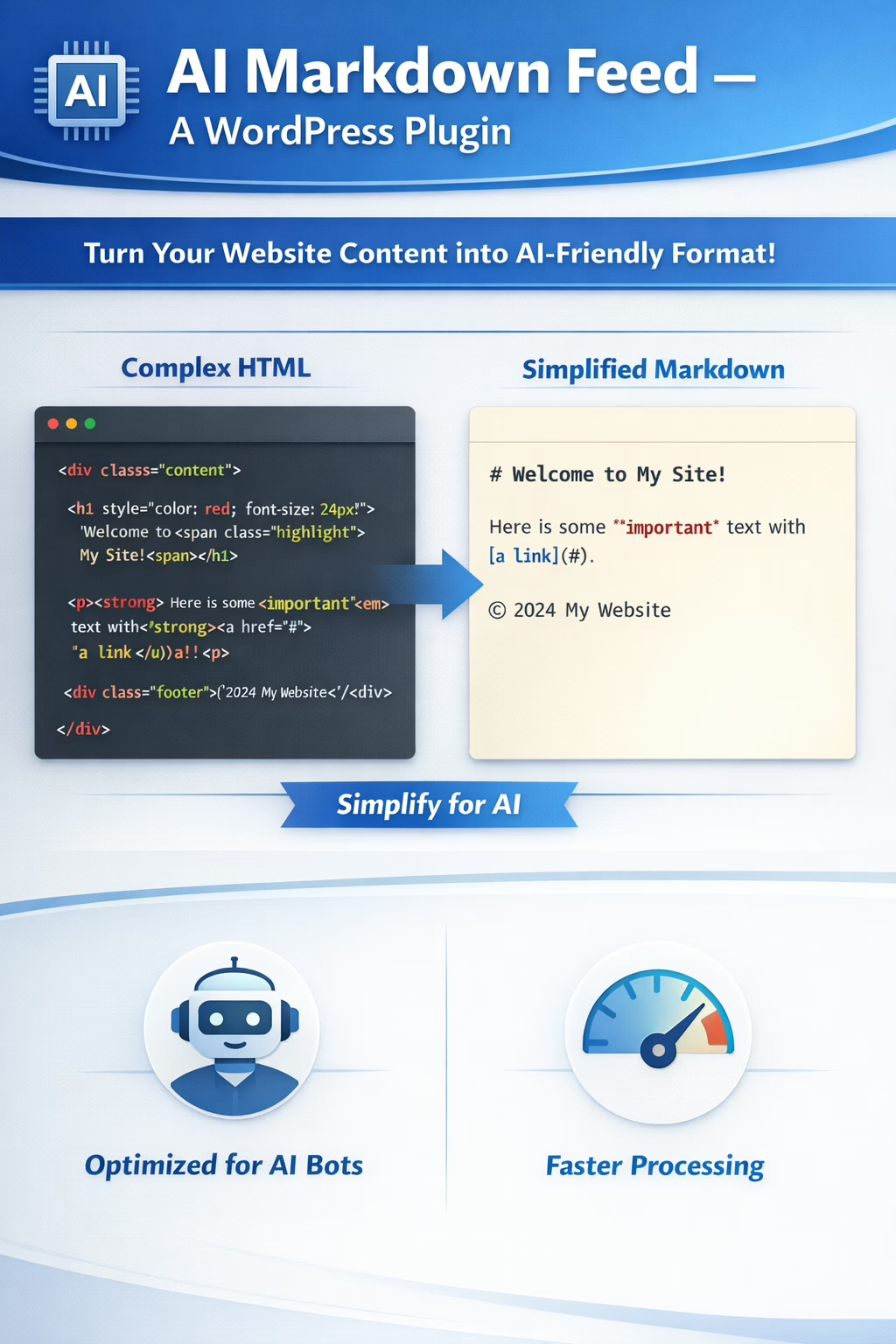
AI Markdown Feed - Turn Website Content into AI-Friendly Format

Following a read of a post by Nicholas Khami, I decided it would be really nice to do something like this with a WordPress plugin. After a quick search of the WordPress plugin repository, I couldn’t see anything that would fit the bill. The basic concept is to deliver the basic structure from your site with a lower token count and less wasted context.

Purpose:

Provide a simple way to make your website more AI consumption-friendly with a turnkey WordPress plugin. Activate and make sure your agents consume the site with Accept: text/markdown header.

Implementation:

Since I’ve been developing software for a while now, I’ve been a relatively slow adopter of AI. Other than some auto-complete with Copilot and the like, I haven’t really embraced AI development. This seemed like a good project to feed through Claude Code. After having started a few project scaffolds with Claude Code, I decided I needed some structure here and used OpenSpec to walk me through the process. My first version worked, but was delivering too much information. I made some adjustments to the whitespace handling directly. I also had it re-work so we only worked with the main content body.

When:

I plan to be working toward getting this into the WordPress plugin repository at the beginning of January 2026. I’ve built quite a few private plugins for WordPress, but this will be the first one I’m releasing publicly. If you have an immediate need for this plugin, I can send you a link to an installable zip file if you reach out to me here.

References:

You arrive at the office tomorrow morning only to find a notice from the city:
Entrance not permitted.
A foundation issue. A ruptured utility line. Something unexpected — and completely out of your control.

Someone physically stops you from entering.

What happens next?

Do you pivot immediately and keep operating, or does the day grind to a halt?
What if the disruption lasts a week? What if it’s longer?
Who decides the next step, and how quickly?

For some organizations, this scenario is an inconvenience. For others, it’s a full stop.

If your team can work securely from anywhere, access systems remotely, and continue serving customers without missing a beat,
that’s a sign of preparation. If not, the absence of a clear plan can quickly turn a temporary disruption into a material business risk.

This is exactly where Business Continuity Planning (BCP) proves its value.
BCP doesn’t have to be overly complex or theoretical. At its core, it’s about knowing — before something goes wrong
what your next move is. Sometimes that’s a simple, one-page plan. Other times, it’s a structured decision framework that accounts
for multiple failure scenarios.

Either way, being prepared makes the difference between reacting under pressure and operating with confidence.


How We Help Organizations Prepare for the Unexpected

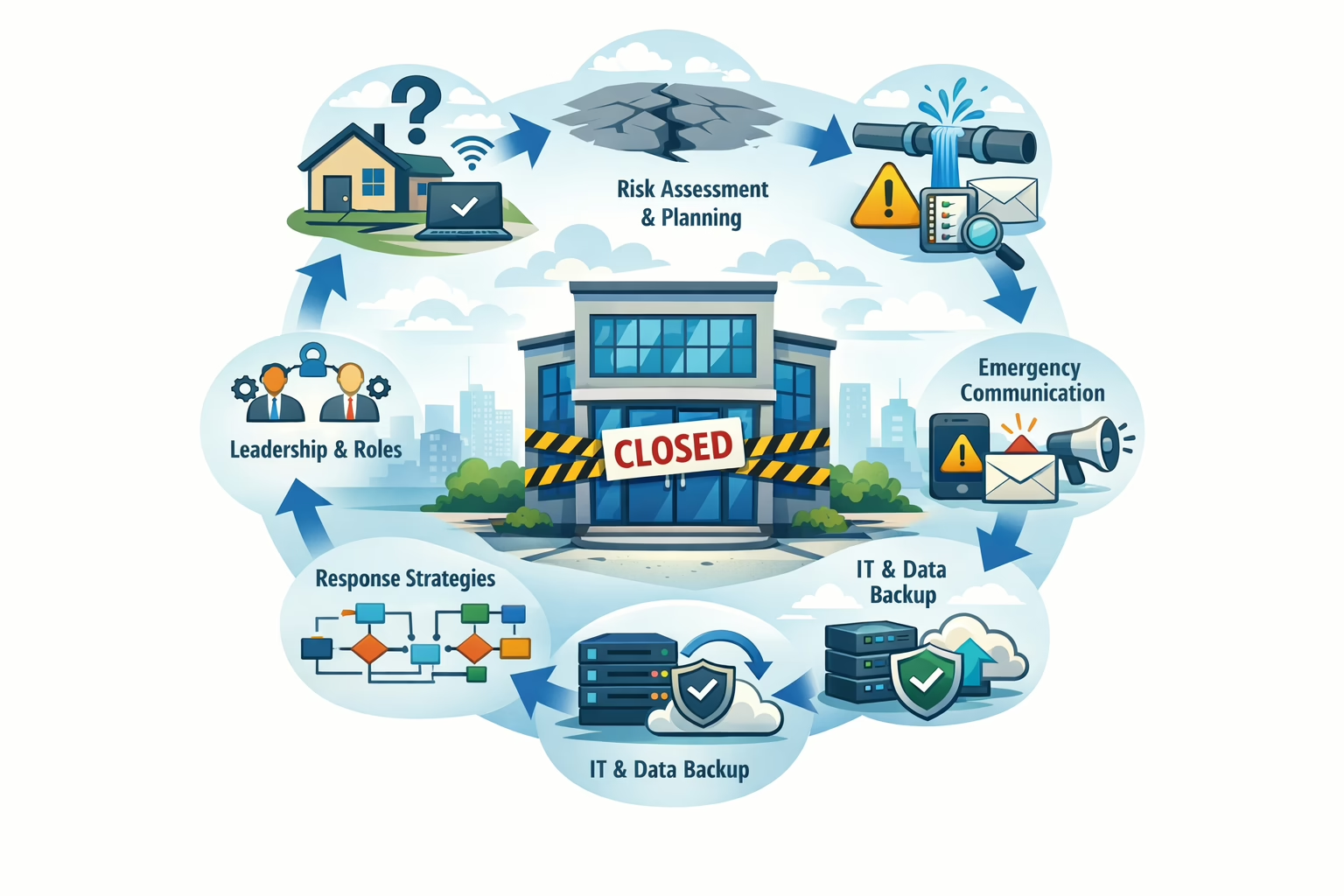
Business Continuity Cycle

  • Right-sized BCP development
    From lightweight, executive-ready continuity plans to comprehensive, multi-path decision models.
  • Technology-enabled continuity
    Assessing systems, access, and dependencies to ensure teams can operate securely from anywhere.
  • Scenario planning & risk analysis
    Identifying realistic disruption scenarios — not just worst cases — and defining clear response actions.
  • Clear ownership & decision frameworks
    Ensuring everyone knows who decides what and when during a disruption.
  • Practical, usable documentation
    Plans designed to be followed in real situations, not left on a shelf.

If you’re unsure what happens the next time your doors are closed — even temporarily — it may be time to put a business continuity plan in place.
Preparation today can protect tomorrow’s operations. Reach out for a consultation today.

TOP