

How AI is changing our Development Process
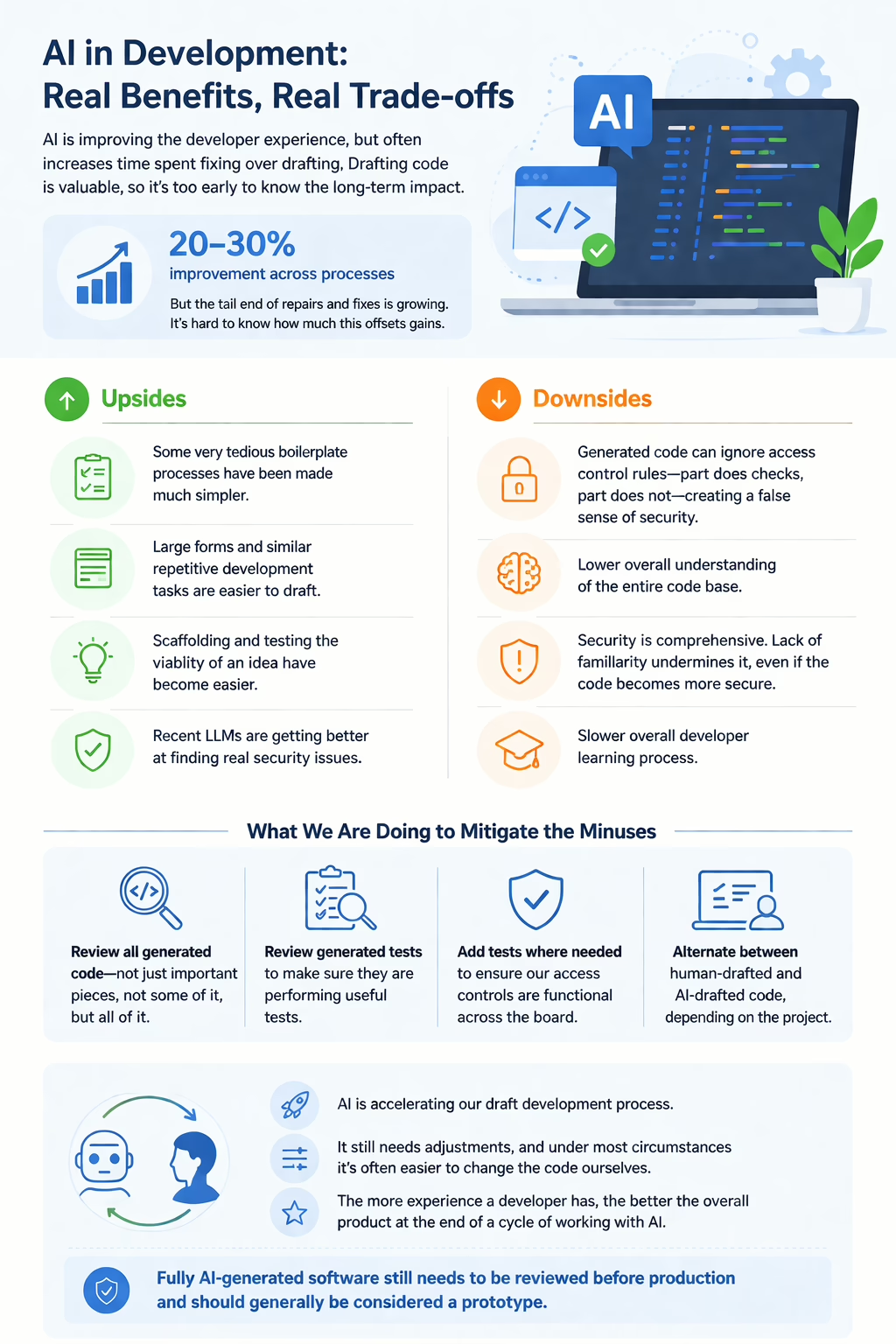
In general, AI is slightly improving the developer experience, though teams may spend more time fixing generated code than drafting it. Drafting code remains a particularly useful part of the process, so it remains to be seen whether AI will ultimately improve or hurt long-term effectiveness.
Right now, we’ve seen a 20–30% improvement across processes, but the tail end of repairs and fixes seems to be growing a little. Since we always get post-build adjustments, it is difficult to tell how much this is actually eating into that 20–30%.
Upsides
- Some very tedious boilerplate processes have been made much simpler.
- Large forms and similar repetitive development tasks are easier to draft.
- Scaffolding and testing the viability of an idea have become easier.
- Recent LLMs are getting better at finding real security issues.
Downsides
- We still frequently see generated code ignoring access control rules that undermine security. More specifically, part of the generated code may do proper checks while another part does not, which makes it easy to be lulled into a false sense of security.
- There can be a lower overall understanding of the entire code base.
- Security is a comprehensive process, and a lack of familiarity with the code undermines it, even if we eventually get to the point where the produced code is more secure.
- The overall developer learning process can be slower.
What We Are Doing to Mitigate the Minuses
- Reviewing all generated code — not just important pieces, not some of it, but all of it.
- Reviewing generated tests to make sure they are performing useful tests.
- Adding tests where needed to ensure our access controls are functional across the board.
- Depending on the project, alternating between human-drafted and AI-drafted code.
So far, AI is accelerating our draft development process. It still needs adjustments, and under most circumstances it is frequently much easier to change the code ourselves.
We have also found that the more experience a developer has, the better the overall product tends to be at the end of a cycle of working with AI.
- Published in Technology
Tailor-Made Software vs Customizable Software
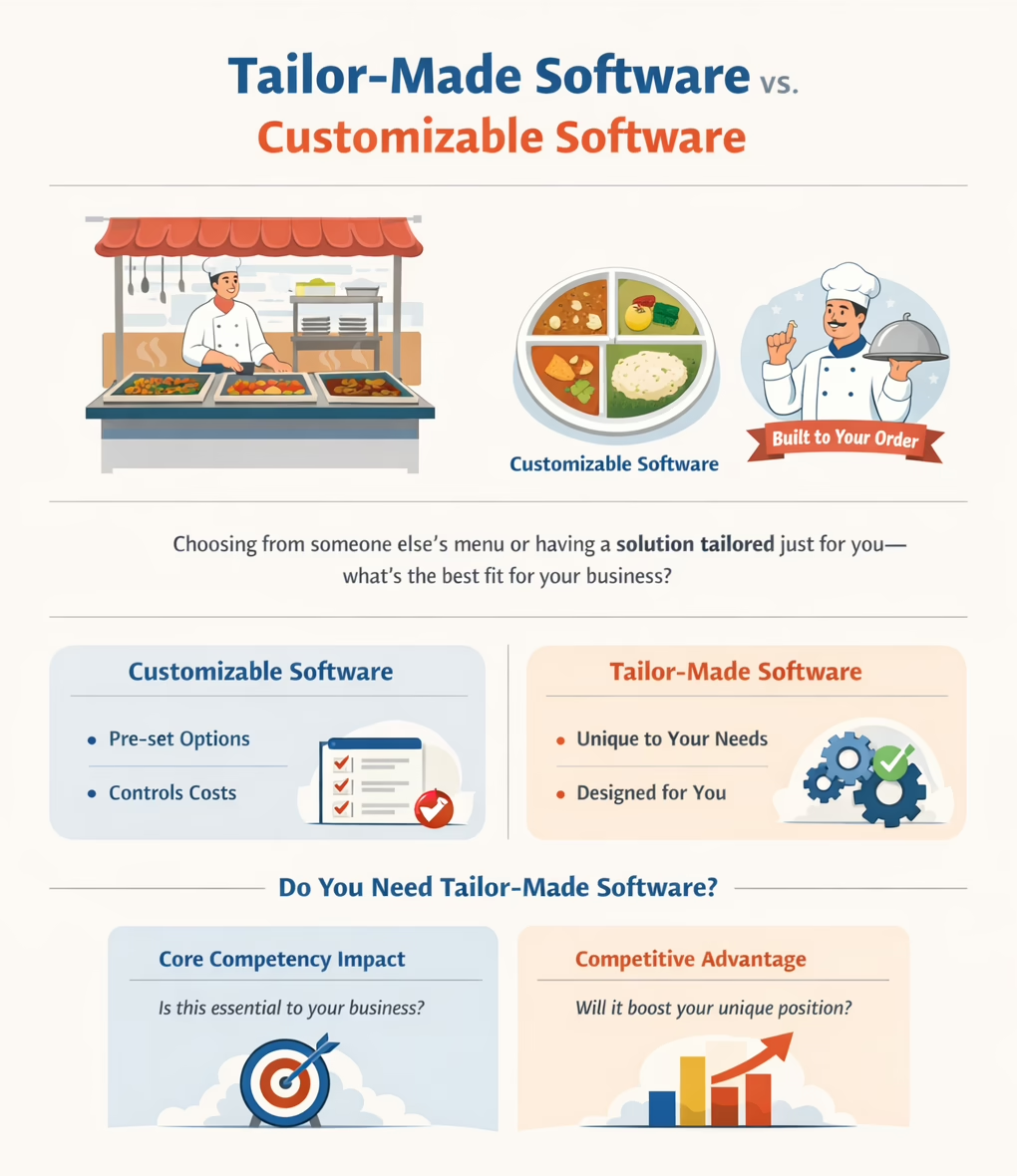
Imagine you are going out to eat. Let’s say it is a Chinese buffet. You can get a custom plate there: choose exactly what you want to eat and leave behind anything that you don’t like. Some software lets you choose your modules, but you are still picking from someone else’s menu. Mostly, you are controlling costs and choosing what you need most.
Fortunately, we don’t have a menu of components for you to choose from. We do know what other software looks like and how people generally do things, but you are not constrained by this. You have your way of doing things, and we want to build a tailor-made solution that works the way you want, not the way that is convenient for the developers.
To complete the analogy, this means you tell the chef what you want, and that is what gets made. You aren’t hoping to choose a unique combination to gain a competitive advantage.
Do You Need Tailor-Made Software?
It depends. Here are some criteria I use to help you understand whether this is suitable for your situation.
1. Does the software touch the core competency of your business?
In other words, does this affect what you are delivering?
- If this is a key part of your business, a tailor-made solution might be a good choice.
- If this is an ancillary or support operation, doing things the standard way can reduce training time and make it easier to adjust these functions as your business evolves.
2. Would tailor-made software support your competitive advantage?
- If your software can reinforce your unique selling proposition, having a system that conforms to that advantage can improve how you deliver value.
- If your industry is better served by operating much like your competition, and your advantage cannot really be reinforced through software, the expense and maintenance of a custom-tailored solution may not be worth it.
How We Help
At Open InfoTech Solutions, we specialize in converting your process and vision into systems that support the way you work. Get a free evaluation today to learn what it might take to custom-tailor software for your needs.
- Published in Technology
Using Blackbaud’s SKY API to improve work for Nonprofits
Nonprofits depend on technology to manage relationships, steward donors, and maintain financial clarity. Unfortunately, the systems they rely on sometimes don’t fully support how their teams actually work.
This is where we come in—creating workflows and synchronization that improve your processes.
One of our specialties is helping organizations unlock additional value from Blackbaud’s technology.
From Systems of Record to Systems of Impact
Blackbaud products are powerful systems of record. For many organizations, there are gaps between their needs and what the application provides. There are even situations where data is being entered in multiple systems.
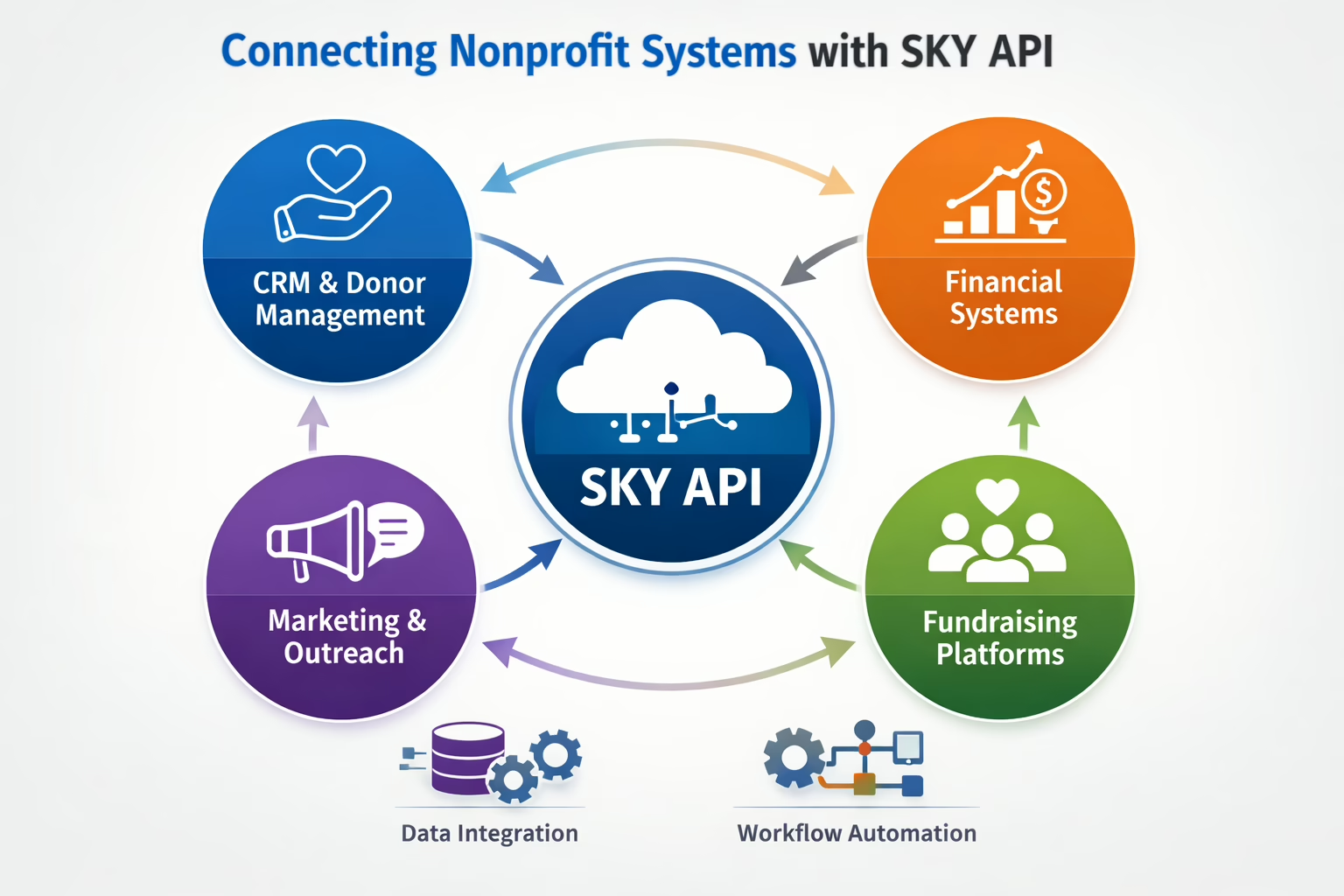
By leveraging the SKY API, we help organizations:
- Connect siloed systems into unified workflows
- Automate repetitive administrative tasks
- Reduce duplicate data entry and errors
- Extend capability with custom applications and integrations
The result is better day-to-day operations.
Engineering That Understands the Mission
Nonprofits operate under unique constraints:
- Lean teams
- Limited technical resources
- High expectations for transparency and accountability
We combine engineering excellence with mission awareness.
We don’t just integrate APIs—we design solutions that:
- Reduce operational friction
- Improve data accuracy and trust
- Enable teams to focus on mission-critical work instead of manual processes
This means building tools that feel intuitive, reliable, and aligned with how nonprofit teams actually operate.
What We’ve Built with SKY API
Custom Integrations
Connecting Blackbaud systems with:
- Marketing platforms
- Internal reporting tools
- Custom P2P fundraising platforms
Workflow Automation
Eliminating manual effort through:
- Data synchronization
- Scheduled reporting pipelines
- Third-party merchant imports
Staff-Focused Tools
Designing applications that:
- Simplify complex processes
- Provide cleaner, role-specific interfaces
- Reduce training time for new staff and volunteers
Making Work More Productive and Enjoyable
One of the most overlooked aspects of nonprofit technology is user experience.
When systems are difficult to use:
- Staff lose time
- Volunteers become frustrated
- Data quality suffers
We believe technology should do the opposite.
By modernizing interfaces and streamlining workflows, we help create tools that are:
- Easier to learn
- Faster to complete tasks
- More aligned with your way of working
The goal is to make teams more satisfied and effective for your mission.
Unlocking the Full Potential of Your Blackbaud Investment
Blackbaud’s SKY API opens the door to powerful possibilities. Realizing that potential requires the right combination of strategy, engineering, and mission understanding.
If your organization is looking to:
- Extend Raiser’s Edge or Financial Edge
- Improve operational efficiency
- Provide better tools for your staff
Modern nonprofit organizations deserve technology that works as hard as they do.
- Published in Technology